Great movies, music and sitcoms; a relatively peace and prosperous decade but the 1990’s was much, much more. This was the introduction to Week Three of Intro to Digital Communications. Kickstarting the fulfillment of the assignment; bring something from the 1990s. Our professor, Kelly Barrett presented her identification from Syracuse University dating back to the 1990s when she was a student. This opened the floodgates of sharing. A few of the uniquely imaginative items shared was a vintage Laker’s jersey, Whitney Houston t-shirt, Tupac/Janet Jackson “Poetic Justice” sweatshirt and my personal favorite, the VHS tape and the over played and long-forgotten Game Boy which was one of the first electronic platforms whose multiple talents included taking your “selfie.” This dwarfed my submission of a 1990’s New York City Village-style maxi dress and my treasured waist purse, which, by the way, looks like a utility belt! However, the topic wasn’t so much about the 1990’s but a perfect segue into the evolution of the Internet in the 1990s and the rise of fake news.
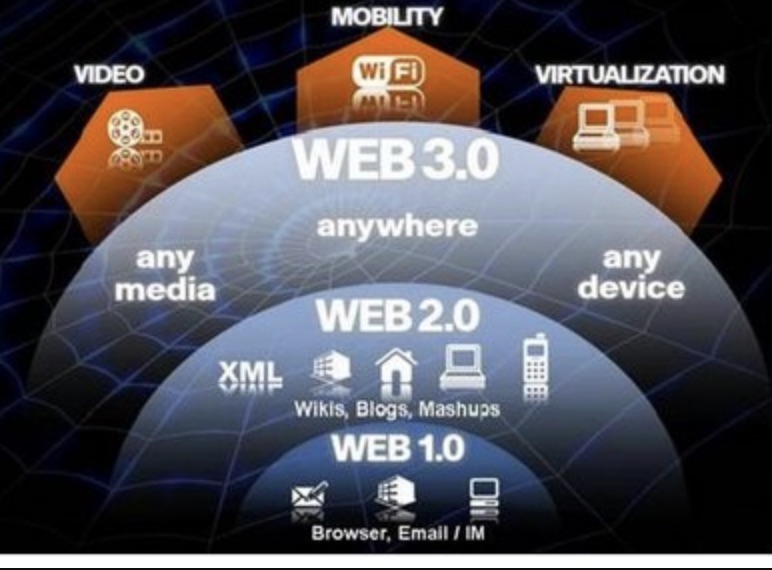
The Internet, had stages such as 1.0 (military use for solutions to a problem), 2.O (generated content), and 3.0 (intelligent, our input for its output), however, we focused on the Internet’s growth during the 1990s and also why “fake news” is generated. Our rush to be “first” tends to limit “veracity” of the content was the top reason. Veracity aka truthfulness, correctness or verifiable facts tends to be absent in reporting some news over the Internet. Sometimes “fake news” is generated on purpose and other times, quite by accident. In the case of the missile alert activated in Hawaii and produced by “accident;” it’s a prime example of “fake news” and the dangers it presents. Audrey, a fellow class participant who lives in Hawaii, recounted that it was a very scary experience for her.
The Internet has become so much of our culture, our everyday life, our day-to-day routine, we can’t imagine it being absent from our lives. Amazingly so, it began in 1957 and evolved to what we know today. It has been a part of our lives for every second of every minute. We can’t imagine life without it because it is part of who we are now. The professor made reference to a quote probably derived from Derek Sivers which states, “Fish don’t know what water is because they live in it.”

The highlight of the evening was when we broke out into virtual groups to discuss the next topic, “digital disruptors.” Imaginative and uniquely-suited was my group consisting of Katarina, Kylie and Matthew. An assembly of motivated, outspoken and strong-willed media “experts.” We jumped into motion as soon as our group session began. While each of us enthusiastically verbalized to share our choice for a digital disruptor, I interjected with first define digital disruptor. Katarina reasoned why her choice, Amazon, should be our topic while we agreed that Matthew’s choice of Spotify and Kylie’s Disney+ were excellent examples as well. Of course, my choice of the financial / business (FinTech) was unique and less likely to be duplicated by the other groups, but I must admit it would have taken longer than the twenty minutes allowed to pull together the presentation. We “volunteered” Matthew to be our spokesperson as he appeared the most polished and clear speaking. More importantly, I enjoyed this group because I was able to meet a smaller group of people on a more relaxed level, learn a little about them as well as have fun with our collaboration. Teamwork! Leaping back into the main meeting we relished interaction with the entire group. Everyone had impressive choices of digital disruptors and how they altered the landscape of the industry they embedded.

Our highly interactive group meeting did not wind down but ended on a high note as we touched on the definition of social media platforms as well as the intricate detailed Conversation Prism created by Brian Solis and how it has changed over time. Next class, presentation on a company and how it fits into the social media conversation. All that in five slides or less! A challenge for a detail-oriented conversationalist like myself. Excited and look forward to this class. It’s a small investment that is delivering tremendous benefits.
“Culture is to humans, what water is to fish.”
David Foster Wallace
 Charlotte’s Wisdom