The Show and Tell of Social Media

Photo by Andrea Piacquadio on Pexels.com

Imagine being tasked with presenting the “nuts and bolts” of a social media entity  but the caveat is, you can NOT pick your usual suspects such at Twitter, Facebook, YouTube, LinkedIn, Spotify, Instagram, Tumblr, Pinterest, TikTok or Snapchat! No way? Oh, YES— way!!!  We did it! Our 12-person group individually delivered five-slide captivating presentations compacted with thought-provoking information. Each presentation captured your attention with content which left little room for theatrics.

Each presenter demonstrated how their platform measured in the definition of “social” according to Conversation Prism by Brian Solis. The Conversation Prism is an ongoing digital ethnography or visual map of the social media landscape. From each presentation, I acquired several new nuggets to store in my arsenal of a brain. Bumble presented by Katarina has three purposes that include dating, meeting friends and networking; Houseparty presented by Levar had many uses in pulling friends in for a virtual party but may have a social pitfall to watch out for; Stumbleupon.com or Mix.com was presented by Daniel and can help you uncover hidden gems (I’m all for more info); Venmo presented by Kylie is more than just a money-transferring service. It also has several helpful “social” features worth looking into; Discord presented by Audrey has many social connecting features similar to Twitter; WhatsApp presented by Chavous is great for international connections and has a desktop version also; VSCO presented by Matthew is an awesome photo editing tools and platform for photographers to display their work; Olivia presented SoundCloud where unknowns and now known artist can house their musical best; Quora presented by Jake gets you answers to your questions (I plan on using it immediately); and Rachael presented Nextdoor which is similar to The Ring but it’s in 11 countries and you connect to a wider network.  Regrettably, I must have missed one of the  illuminating presentations due to a personal mishap that delayed my entrance into the meeting. However, these were very engaging social platforms that not only occupied identifiable areas on the social visual media map, but I believe as these platforms and the map evolves, their positions in the Prism will move as well. As I flagged my hands about in my “Hollywood Square,” I was full of many questions for each presentation, but I was unable to unleash my curiosity or share my forecast and only the future will confirm my hypothesis.

There was one more presentation not yet mentioned. It was requested the minute my presence was known in the virtual room. It was Groupon presented by Charlotte! Groupon, who was birthed the same year as the Conversation Prism, models itself on successfully being a social media entity by creating community with every brand and consumer. Moreover, they have progressed to actually have a “one playbook” business plan where they operate on the same set of principles and strategy across all markets. Groupon creates content relevant for individual localities using the local flavor of those places but still maintains a consistent global voice as well. They manage several social media platforms globally; all shouting the same “Groupon” voice. Although, I was never in the “planning” room for Groupon, it almost appears as if they used the Conversation Prism as the focal point of their planning conversation. But that is just my assumption based on their action plans, amazing success and bounce back capabilities.

Phenomenal session! Looking forward to next week as we discuss our “Digital Consumption.”

“Don’t use social media to impress people; use it to IMPACT people”

DaveWillis.org
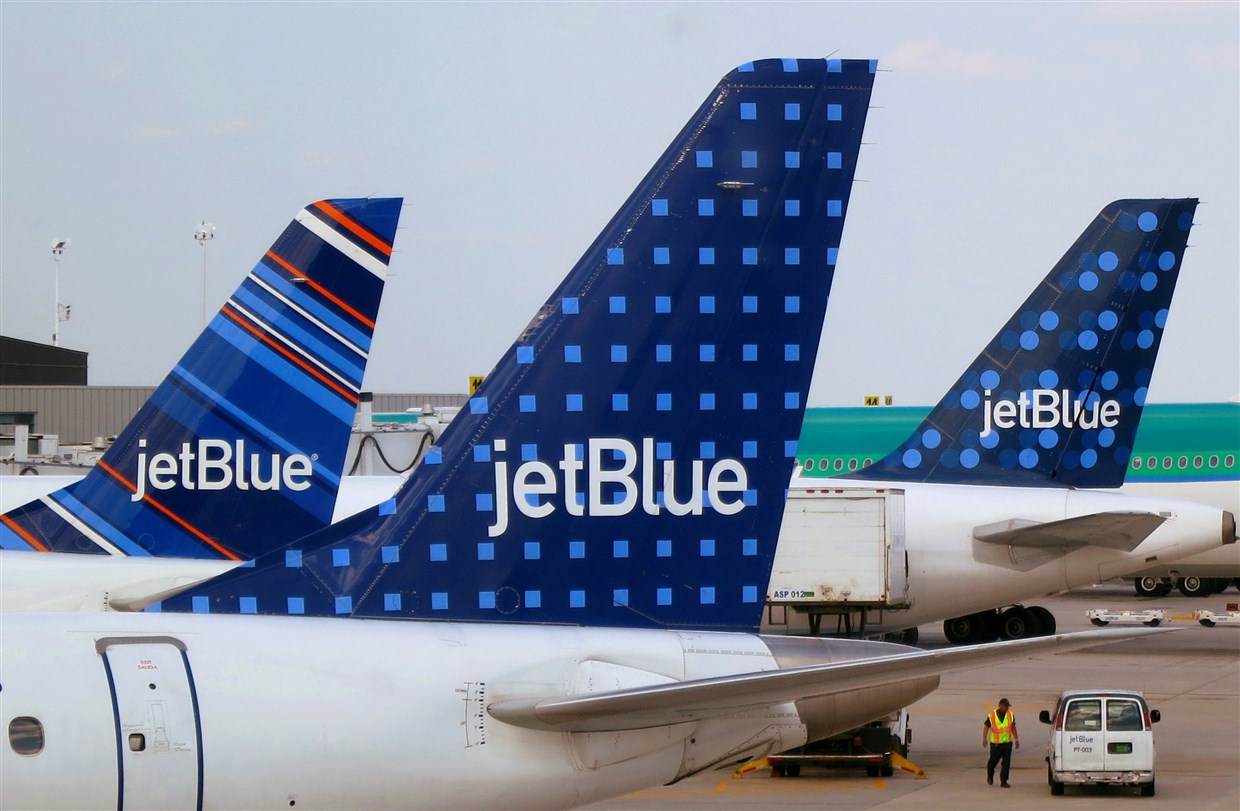
JetBlue Airways – Social Media Olympians!

Fred Prooser /Reuters

JetBlue Airways have earned a reputation of building relationships and “midasizing” their brand through the use of social media.  There approach epitomizes the power of social media and emphasizes their strategy that deflects from direct sales and focuses more on brand building and customer relations. As of this date, their digital footprint is larger than Big Foot with JetBlue’s YouTube Channel, accumulating 67.3K subscribers and averaging 28.9K views; their “platinum platform,” Twitter has over 1.9 million followers and an average of 11.6K daily viewers; and Facebook amassed over 1.5 million followers and 2.9 million views on average.  Additionally, JetBlue uses its social media platforms to attract the public to its website, jetblue.com where you can buy tickets, earn points, and qualify for their credit card; this definitely “converts you from fan to customer.”  JetBlue Airways “learned” to effectively use video, microblogging and social networking to connect with the public and strengthen its brand. However, they did not always bask in the sunshine; there were dark days.

Photo by Pixabay on Pexels.com

It was February 14, 2007, Valentine’s Day…disaster hit. It was the catastrophe every airline dreads. Poor weather, an inadequate communications system and a series of blunders left pilots and flight attendants in the dark, caused 1,000 flight cancelations and stranded thousands of passengers on Valentine’s Day. Unfortunately, this  cataclysm also gave a “black eye” to JetBlue’s marketing initiative to develop a better relationship with its customers with a goal to “bring the humanity” back to air travel. This Valentine’s Day nightmare did not spark love from its customers, but JetBlue responded using traditional and social media to appease its disillusioned travelers.

Photo by burak kostak on Pexels.com

The Chief Executive Officer at that time, David Neeleman, delivered an unscripted YouTube video apologizing for the airline’s mistakes and announcing a “Customer Bill of Rights,” outlining steps the airline would take in response to service interruptions. His sincere and transparent apology on a social media platform triggered a substantial number of comments, both positive and negative. Consequently, it revealed to JetBlue the power of using social media to establish a two-way dialogue with its customers, improve customer relations as well as repair their damaged image.

Photo by Spencer Davis on Pexels.com

Today, JetBlue Airways is one of the top airlines, largely, in part to its social media initiatives. While it did not originally begin with a strong digital strategy, tragedy and experience have taught and trained its marketing professionals the importance of keeping JetBlue “top of mind” on every platform. Essentially, JetBlue Airways present CEO, Robin Hayes, has paid tribute to six JetBlue employees who have passed away from COVID-19. His compassion, empathy and support have flooded the digital airways. His leadership and transparency are “news” shared on all social media platforms as a digital initiative spearheaded by JetBlue Airways as “their strategic priorities going forward.” Needless to say, the response by customers via social media is overwhelming!

“It’s a dialogue, not a monologue, and some people don’t understand that. Social media is more like a telephone than a television.”

Amy Jo Martin,

Founder and CEO of Digital Royalty

The 1990’s – The Good Decade Week III

Great movies, music and sitcoms; a relatively peace and prosperous decade but the 1990’s was much, much more.  This was the introduction to Week Three of Intro to Digital Communications.  Kickstarting the fulfillment of the assignment; bring something from the 1990s. Our professor, Kelly Barrett presented her identification from Syracuse University dating back to the 1990s when she was a student.  This opened the floodgates of sharing.  A few of the uniquely imaginative items shared was a vintage Laker’s jersey, Whitney Houston t-shirt, Tupac/Janet Jackson “Poetic Justice” sweatshirt and my personal favorite, the VHS tape and the over played and long-forgotten Game Boy which was one of the first electronic platforms whose multiple talents included taking your “selfie.”  This dwarfed my submission of a 1990’s New York City Village-style maxi dress and my treasured waist purse, which, by the way, looks like a utility belt!  However, the topic wasn’t so much about the 1990’s but a perfect segue into the evolution of the Internet in the 1990s and the rise of fake news.

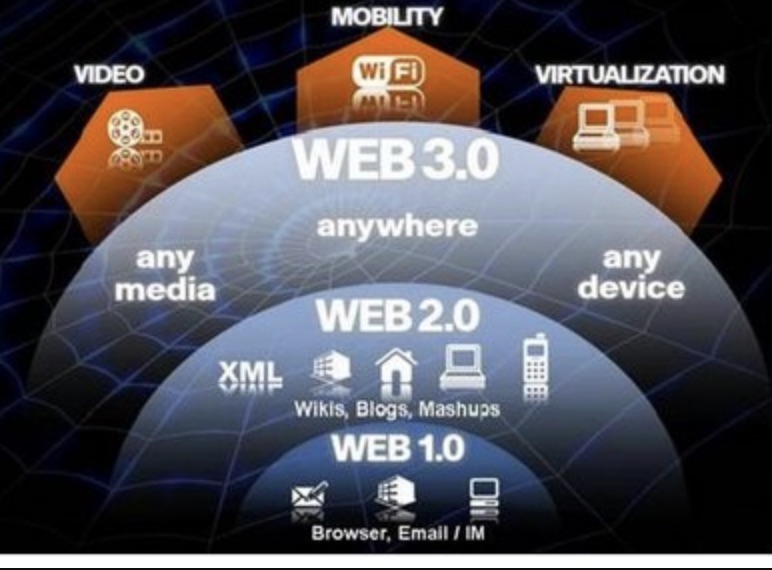
The Internet, had stages such as 1.0 (military use for solutions to a problem), 2.O (generated content), and 3.0 (intelligent, our input for its output), however, we focused on the Internet’s growth during the 1990s and also why “fake news” is generated.  Our rush to be “first” tends to limit “veracity” of the content was the top reason.  Veracity aka truthfulness, correctness or verifiable facts tends to be absent in reporting some news over the Internet. Sometimes “fake news” is generated on purpose and other times, quite by accident.  In the case of the missile alert activated in Hawaii and produced by “accident;” it’s a prime example of “fake news” and the dangers it presents.  Audrey, a fellow class participant who lives in Hawaii, recounted that it was a very scary experience for her.

The Internet has become so much of our culture, our everyday life, our day-to-day routine, we can’t imagine it being absent from our lives.  Amazingly so, it began in 1957 and evolved to what we know today.  It has been a part of our lives for every second of every minute.  We can’t imagine life without it because it is part of who we are now.  The professor made reference to a quote probably derived from Derek Sivers which states, “Fish don’t know what water is because they live in it.”

Photo by Ketut Subiyanto on Pexels.com

The highlight of the evening was when we broke out into virtual groups to discuss the next topic, “digital disruptors.” Imaginative and uniquely-suited was my group consisting of Katarina, Kylie and Matthew. An assembly of motivated, outspoken and strong-willed media “experts.”  We jumped into motion as soon as our group session began.  While each of us enthusiastically verbalized to share our choice for a digital disruptor, I interjected with first define digital disruptor.  Katarina reasoned why her choice, Amazon, should be our topic while we agreed  that Matthew’s choice of Spotify and Kylie’s Disney+ were excellent examples as well.  Of course, my choice of the financial / business (FinTech) was unique and less likely to be duplicated by the other groups, but I must admit it would have taken longer than the twenty minutes allowed to pull together the presentation.  We “volunteered” Matthew to be our spokesperson as he appeared the most polished and clear speaking.  More importantly, I enjoyed this group because I was able to meet a smaller group of people on a more relaxed level, learn a little about them as well as have fun with our collaboration. Teamwork!  Leaping back into the main meeting we relished interaction with the entire group.  Everyone had impressive choices of digital disruptors and how they altered the landscape of the industry they embedded.

Photo by Andrea Piacquadio on Pexels.com

Our highly interactive group meeting did not wind down but ended on a high note as we touched on the definition of social media platforms as well as the intricate detailed Conversation Prism created by Brian Solis and how it has changed over time.   Next class, presentation on a company and how it fits into the social media conversation.  All that in five slides or less!  A challenge for a detail-oriented conversationalist like myself.  Excited and look forward to this class. It’s a small investment that is delivering tremendous benefits.  

Culture is to humans, what water is to fish.” 

David Foster Wallace

Fake News

Maria Reynolds, the latest Supreme Court nominee by  #45, the leader of the “free” world,  joined him for a secret dinner at the White House last night. Mrs. Reynolds known for her belief that Cuba and the United States should merge as one country, was joined by her husband, Reginald Reynolds, cousin to the Queen of England. Not uncommon, but noticeably absent, was Melania,  who had a rendezvous of her own with a gentleman only identified as having a full head of white hair that housed a huge horse fly.  Melania’s presence was not missed by #45 who steadied his stomach and feasted on:  

  • 10 kegs of sea-salt caramel juice
  • young pumpkin bowls with cheesy oat-and-honey snacks
  • pen marlin toast on gnarled oak bark
  • 6 breaded hare carcasses simmered in fig oil and pear cheese wedges, with a drizzle of salted tuber sauce
  • an explosion of dried persimmons
  • crushed fruits and veals
  • entire crayfish patties accompanied by creamy potato bushels, and
  • Lo-Pauvret-style mutant pig feet soaked in monster tongues juices and orange pies

Source: http://orteil.dashnet.org/ (Fake News Generator)

As you can see, it doesn’t take much to create FAKE NEWS.  I uncovered dozens of “fake news” generators  within seconds by just one search.  Generating untruths, rumors and gossip for the sake of furthering ones agenda, destroying someone’s credibility or increasing ones popularity has become an all too common practice by a growing mass of people – from our leaders to children seeking revenge.  It is believed that just because you speak something into the air, post it on the internet or put it on an outdoor bulletin board transforms the statement from fiction to fact, truth-worthiness and actual news.

Fact #1:

Just because you speak something into the atmosphere doesn’t make it “real,” “accurate,” or even news.   

Photo by Andrea Piacquadio on Pexels.com

First,  let’s like define “fake news.”  The terminology “fake news” has different meanings to different people. However, the definition is clear: Fake news is false information or stories created to deliberately misinform or deceive readers. It is often created to influence views or for political motives. Fake news is a lie created out of nothing – that takes the appearance of real news with the aim of deceiving people.  Let’s just call it what it is; it’s a LIE.

We must also determine it to be inaccurate or fake news.  Generators of “fake news” tend to provide statistics or generate facts to legitimize their fake news. For example, let’s look at this headline ripped out of this weekend’s news:

Trump welcomes hundreds of supporters at White House lawn days after hospital release

What’s wrong with this “news” story?  They look like Trump supporters.  After all, everyone is wearing red “Make America Great Again” caps and holding up signs of support. But are they really there to support Trump?  Could they be people who were paid money plus room and board at Trump Hotel while he billed the Government for their stay because they were White House Visitors?  Who knows the legitimacy or truth of the event.  This is why we must develop our Media Literacy.

Photo by olia danilevich on Pexels.com

What is “media literacy? ” According to the National Association for Media Literacy Education, media literacy is the ability to access, analyze, evaluate, create and act  using all forms of communication. It is also the ability to identify different types of media and understand the messages they are sending.   We are constantly being thrown huge amounts of information from different types of media.  We as readers/viewers/absorbers need to look at the information from the media or whoever is controlling the source, more objectively.  We should have a discerning eye, ask questions, analyze each bit of information and make determinations before we accept information at face value. 

All media that distributes information does so with the knowledge that they are the “influencer.”   They have the ability to sway our thinking and consequently our actions; possibly  in an election. It is imperative that we analyze information, consider the source and evaluate the level of accuracy before we act.   Implementing these practices as we inhale all this “information” will enable us to establish legitimacy and make effective decisions and act appropriately based on fact and not information masquerading as “truthful” information.

Besides, if you think about it, how easy is it to acquire Lo-Pauvret-style mutant pig feet soaked in monster tongues juices and orange pies for dinner?

Believe None of what you Hear, and only Half of what you See.”

Benjamin Franklin/Edgar Allan Poe

The First Date

Our first “Introduction to Digital Communications”  class was, coincidentally, a testament to the impact of technology on our lives and how it has transcended into how we use digital communication.  As we introduced ourselves, I noticed that each of us were physically located in various parts of the world with different time zones, laws and lifestyles, however, through technology we have been put into “Hollywood Squares” on a communication platform known as Zoom to discuss the evolution and convergence of digital communications.  With just this tidbit of knowledge, I was excited to be part of the “history making” statistics.  One might ask why is this common process of online learning considered “history making;”  simply because just about everyone made reference to the current historical pandemic, its impact on their employment or life status and how they opted for a positive solution –  strengthening of their academic portfolio.  History will surely measure this action and the statistical data will be mesmerizing.

Photo by Andrea Piacquadio on Pexels.com

We discussed key topics including digital convergence, technology, and business convergence (specifically Disney and its multi platforms). Everyone was given the opportunity to impart their knowledge on defining the powerful words.   Also, give examples of convergence and the synergy that illuminates from it.

Photo by Pixabay on Pexels.com

Additionally,  we discussed the positive and negative effects technology has had on society.  For example, technology has provided us with the opportunity to learn anything we want.  We no longer have logistical or academic handicaps.  We are welcome to absorb whatever information we choose.  However, we must be discerning in our engagement of information.  Anyone now has the opportunity to circulate information into the distribution centers (internet, media etc) but this does not give it legitimacy; in other words it could be highly inaccurate. Also, someone pointed out that technology opened the door to elevated levels of cyber bulling, another commented on the diminishing social skills in human beings and our inability to verbally communicate to each other, while others mentioned fixed identities and the fact that we all suffer from information overload. 

Photo by The Teens Network Daytime Show Studios on Pexels.com

Several topics were discussed, specifically Twitter as a powerful tool.  I learned a great deal from one student who shared how he has “Twitter List” on topics of interest.  My immediate goal was to look up the process as I would like to have “Twitter List” in my toolbox.

As the class moved forward and touched on topics from the class agenda, I found myself wanting to comment on everything.  However, I know that everyone deserves a chance and with that said, I attempted to hang back. However, when the subject of the Skyscraper Model hit the air, my hand jumped up again.  I had definite views about the inaccuracies of this model.  Also, why others felt the map was a more feasible model to use, I believe there really isn’t a “cookie cutter” approach when it comes to herding people into categories based on their likes and dislikes; too many are extremely unique and break the mold.   With the map, it, does not delineate between good and bad which puts it in the unrealistic category for me. Realistically, there is a definite good and definite bad and what it is…that’s up for interpretation.

Photo by Wherbson Rodrigues on Pexels.com

Interesting enough, we touched on the Five Steps to the Critical Process  (description, analysis, interpretation [so what], evaluation and engagement.  Everyone had clear opinions on examples and the interpretation on this subject.

I am looking forward to the second week’s class and “all things ‘90s”  as well as our discussion on digital disruptors and what we uncovered about the #1 topic of this decade, “fake news.”

“Live life as though nobody is watching,

and Express yourself as though

everyone is listening.

Nelson Mandela

Charlotte’s World Begins

In the wake of a unforeseen deadly pandemic (at least not known by the average everyday hard working Jane), you rethink your existence, your footprint in this world as well as your hopes and dreams.  It is during this enlightening, “social distancing,”  and isolating moments that you discover you haven’t completed your bucket list.  You’ve just been too busy trying to survive. You’ve binged watched, redecorated and learned everything from gourmet cooking to cutting your own hair to building furniture and still you are left unsatisfied. What’s left? How can you improve and reinvent YOU and leave an memorable footprint in this world?   

“Life and time has always been precious but now its worth more than the gold, diamonds and trinkets in your jewelry box or your once significant investments that have yet to upgrade past toilet status during these unusual days.” 

Charlotte Chorot Bernard

It’s time, it’s overdue, time to do YOU.  The best way to begin is at the beginning of your dreams and go down the list.  Let’s GO!!!